
 BBELC
BBELC
Dry Type Power Transformer
The selected range covers cast-resin, VPI, isolation, rectifier and phase-shifting designs, with insulation, cooling and winding duty matched to the power system. Voltage, capacity, harmonics, enclosure and site conditions define a safe indoor, outdoor, marine or containerized configuration. The electrical schedule and delivery requirements support an engineered quotation, approval drawing and tested shipment plan.
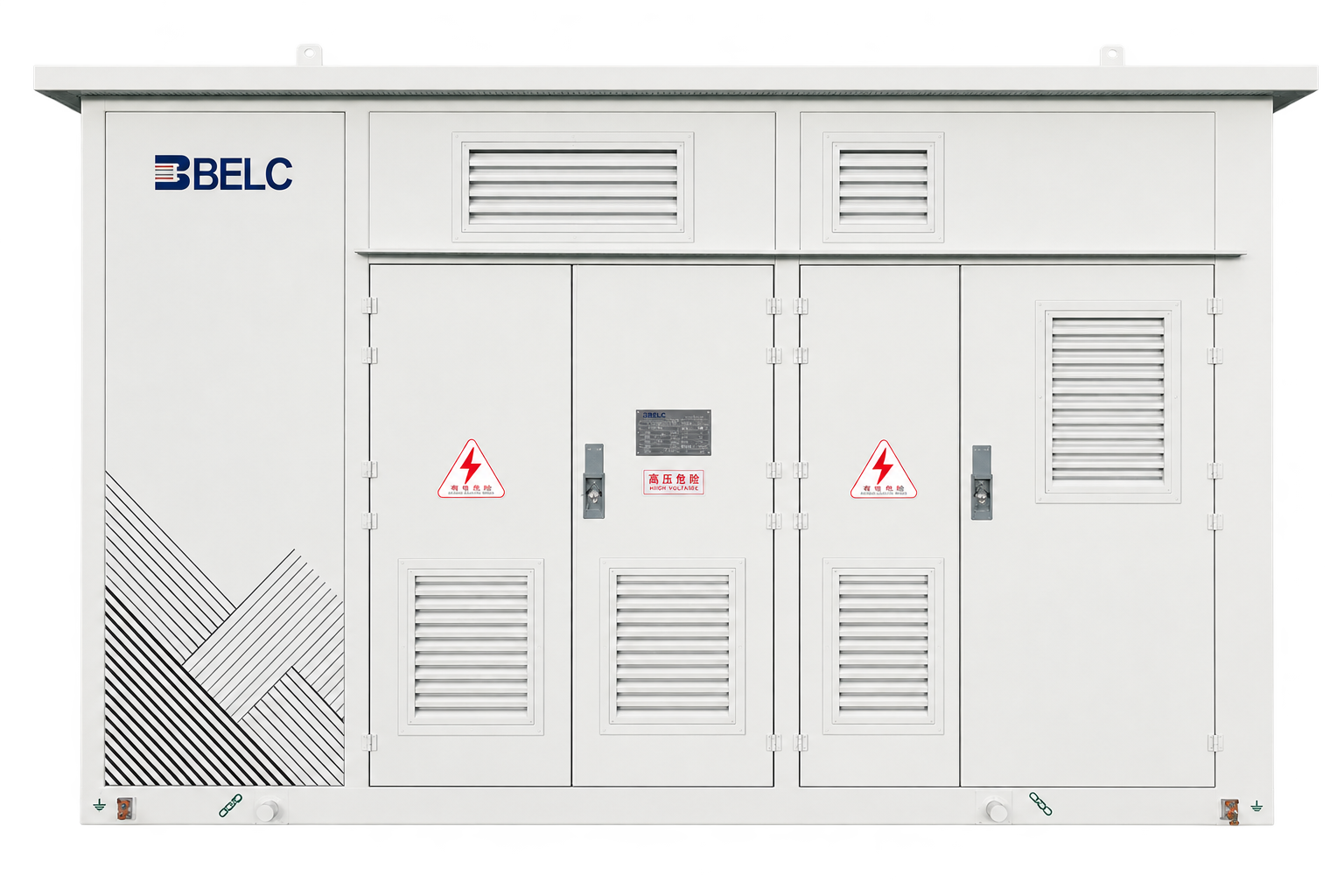
Dry Type Power Transformer
Transformer Construction and Electrical Duty
Dry-type construction describes the insulation and cooling system; it does not by itself define the winding duty. The load and converter topology determine which insulation, cooling and enclosure can maintain the specified temperature rise and dielectric performance.
| Transformer family | Best fit | Key design focus | Typical site or load |
|---|---|---|---|
| Cast-resin distribution | Indoor distribution and humidity-resistant installations | Encapsulated windings, mechanical support and enclosure ventilation | Buildings, plants, data rooms and compact substations |
| VPI or open-wound | General industrial power and flexible engineered ratings | H- or F-class insulation, air paths and contamination control | Clean indoor rooms or protected enclosures |
| Isolation | Voltage conversion, galvanic separation and neutral formation | Separate windings, optional electrostatic shield and grounding arrangement | UPS, shore power, test equipment and sensitive loads |
| Rectifier and phase-shifting | Multi-pulse converters and medium-voltage drives | Phase displacement, group impedance, harmonic loss and thermal balance | Drives, EV charging, HVDC, renewable converters and regenerative systems |
Electrical and Site Conditions for Configuration
The electrical brief should state primary and secondary voltage, kVA or MVA, frequency, phase, vector group, impedance, tap range, grounding, short-circuit level and the complete load profile. Converter-fed projects also need the rectifier topology, pulse number, harmonic spectrum, overload cycle and any operating case with one bridge or cooling stage unavailable.
The site brief should state indoor or outdoor location, ambient temperature, altitude, humidity, condensation, dust, salt mist, corrosive gas, vibration, footprint, lifting route, terminal direction and available ventilation or cooling water. These inputs determine cast-resin or VPI insulation, conductor choice, enclosure, anti-corrosion treatment and AN, AF or AFWF cooling.
For compact data-center, marine and containerized installations, the transformer must be checked together with room airflow, cable bending space, maintenance access, fire zoning and system redundancy. A shared voltage and capacity do not make two units interchangeable when impedance, phase relation, environment or interfaces differ.
From RFQ Data to Tested Transformer Shipment
Start the RFQ with the one-line diagram, electrical schedule, load profile, installation environment, applicable standards, quantity, destination and required delivery date. Existing replacement projects should also include nameplate photographs, interface drawings and measured installation constraints.
- Technical review: cnbbelc resolves voltage, capacity, winding groups, impedance, insulation, cooling, enclosure and accessory requirements.
- Drawing approval: the outline, terminal arrangement, connection diagram and nameplate schedule are issued for approval before manufacturing release.
- Manufacture and testing: windings, core, insulation, assembly and routine electrical tests follow the approved design; optional witness or type tests are scheduled in the order.
- Documents and shipment: the final drawing set, routine test report, packing list and shipping marks travel with the transformer under the agreed Incoterm.
Sixteen Dry-Type Transformer Configurations
The range includes distribution, isolation, rectifier and phase-shifting dry-type transformers for conventional loads and converter-rich systems. Available choices include cast-resin, VPI, natural-air, forced-air and air-to-water-cooled designs for different electrical duties, site environments and enclosure needs.
Phase-Shifting Rectifier Transformer for Heavy-Duty EV Charging — Dry Type Power Transformer
Feeds multi-pulse rectifiers in high-power charging substations while separating the grid from converter loads.
- Application / fitHeavy-duty EV charging and integrated charging substations
- Rating / electrical range6–35 kV primary; 12- or 24-pulse secondary groups
- Core / winding materialsCold-rolled grain-oriented silicon-steel core; copper or aluminum windings
- Electrical interfaceProject busbar or cable terminals; specified vector group

Three-Phase Cast Resin Dry-Type Distribution Transformer — Dry Type Power Transformer
Provides oil-free three-phase distribution where indoor fire safety and low routine maintenance matter.
- Application / fitCommercial buildings, plants, data rooms and indoor substations
- Rating / electrical range25 kVA–12.5 MVA; up to 35 kV class
- Core / winding materialsEpoxy cast-resin windings; silicon-steel core
- Electrical interfaceCopper-bar or cable terminals; project tap range

Dry-Type Isolation Transformer — Dry Type Power Transformer
Separates primary and secondary circuits for voltage conversion, neutral formation and noise-control designs.
- Application / fitIndustrial equipment, UPS, test systems and sensitive loads
- Rating / electrical range1–35 kV; single- or three-phase configurations
- Core / winding materialsF- or H-class dry insulation; copper or aluminum windings
- Electrical interfaceSeparate primary and secondary terminals; optional electrostatic shield
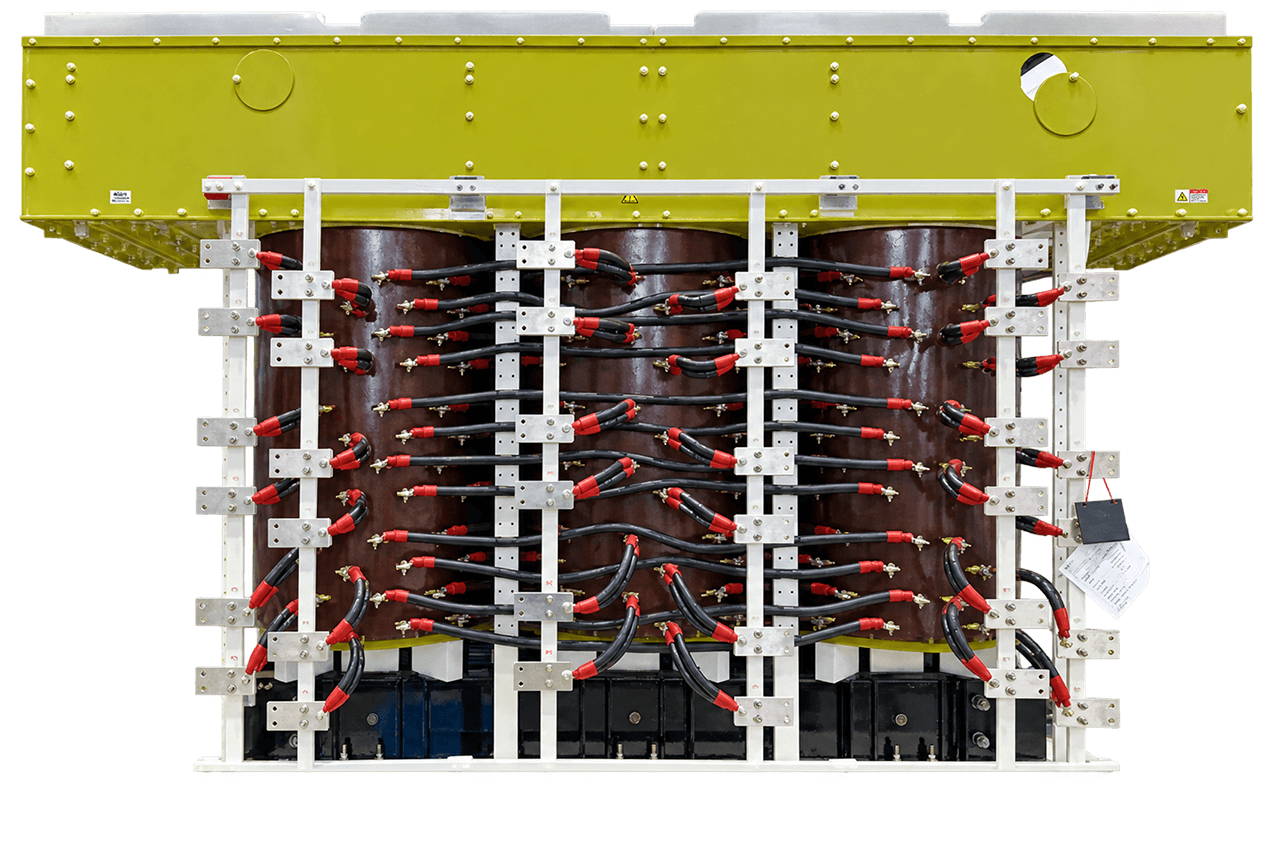
11,000 kVA Four-Winding Dry-Type Rectifier Transformer for Medium-Voltage Drives — Dry Type Power Transformer
Supplies multiple rectifier bridges for high-power medium-voltage drive systems.
- Application / fitMining, pumps, fans, compressors and industrial variable-frequency drives
- Rating / electrical range11,000 kVA; four secondary winding groups
- Core / winding materialsH-class NOMEX turn insulation; silicon-steel core
- Electrical interfaceMulti-winding busbar terminals; engineered phase displacement
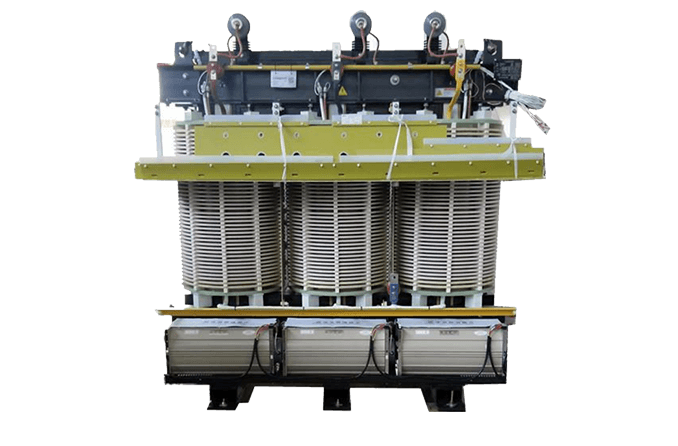
Dry-Type Isolation Transformer for Shore Power — Dry Type Power Transformer
Provides shore-to-ship galvanic isolation with corrosion protection for humid and salt-mist locations.
- Application / fitPorts, shipyards and shore connection systems
- Rating / electrical range6–20 kV primary options; 50/60 Hz
- Core / winding materialsThree-coat insulated windings; protected steelwork and plated copper bars
- Electrical interfaceProject shore connector and ship-side busbar or cable terminals

Containerized Dry-Type Transformer for Industrial Power Supply — Dry Type Power Transformer
Packages the transformer, cooling and connection interfaces for relocatable industrial power.
- Application / fitOutdoor plants, mobile power, temporary works and modular substations
- Rating / electrical range500 kVA–10 MVA; 6–35 kV primary options
- Core / winding materialsDry-type windings, silicon-steel core and protected container enclosure
- Electrical interfaceContainer cable-entry plates or busbar transition sections
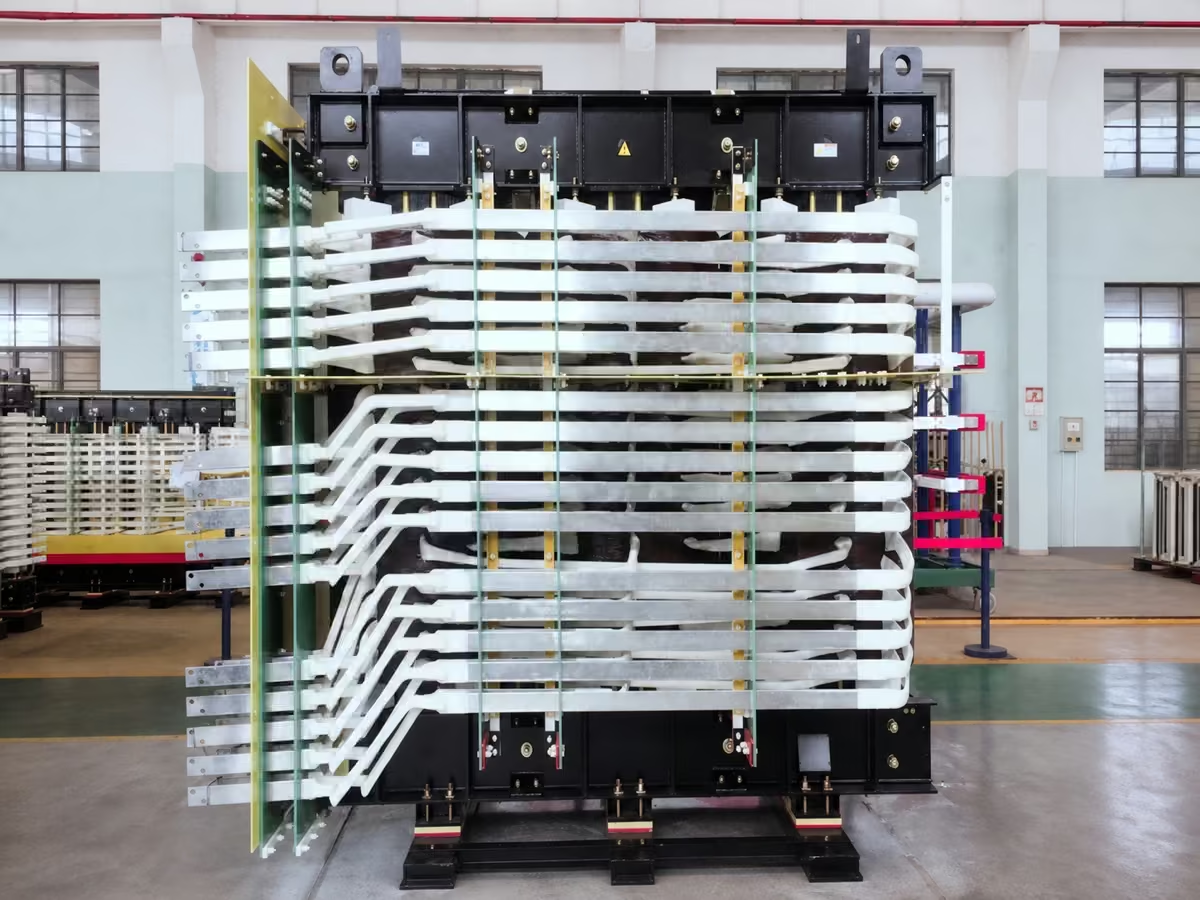
AFWF Dry-Type Rectifier Transformer for Medium-Voltage Drives — Dry Type Power Transformer
Uses closed-loop air-to-water cooling so the transformer does not exchange operating air with the room.
- Application / fitHigh-power drives in dusty, hot or contamination-controlled plants
- Rating / electrical rangeUp to 14,000 kVA; 20 kV class and below
- Core / winding materialsH-class dry insulation in an IP54 cabinet
- Electrical interfaceMulti-pulse secondary busbars; AFWF cooling-water connections
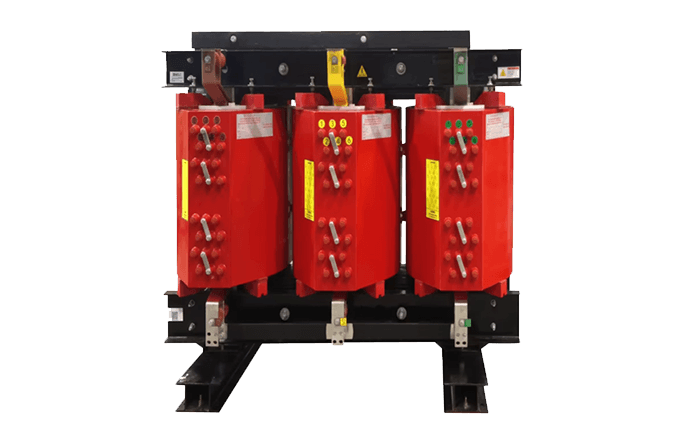
Dry-Type Transformer for Marine and Offshore Applications — Dry Type Power Transformer
Adapts winding support, cooling and enclosure details to vessel motion, salt mist and restricted machinery spaces.
- Application / fitMain, auxiliary, propulsion, navigation and offshore facility power
- Rating / electrical range100 kVA–10 MVA; 50/60 Hz project designs
- Core / winding materialsF- or H-class insulation with corrosion-resistant hardware options
- Electrical interfaceShip cable glands or busbars; project earthing arrangement
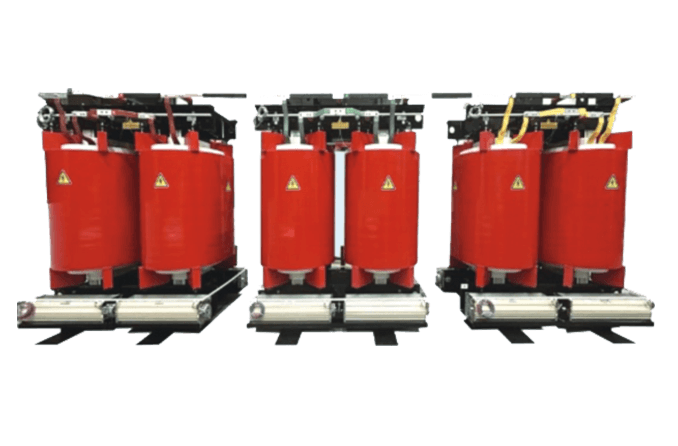
Dry-Type Transformer for Power Testing Applications — Dry Type Power Transformer
Delivers configurable test voltage and isolation for laboratories, production lines and grid-test systems.
- Application / fitType testing, R&D, burn-in, harmonic and power-quality testing
- Rating / electrical range50 kVA–10 MVA; 50/60 Hz or specified test frequency
- Core / winding materialsCast-resin or VPI dry insulation; segmented winding options
- Electrical interfaceConfigurable taps and test-bay cable or busbar terminals
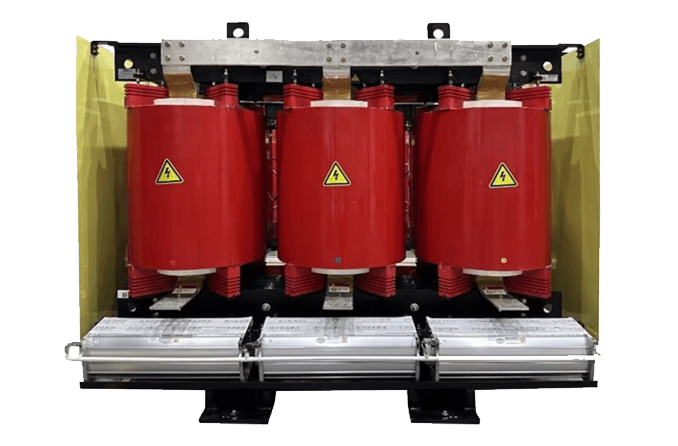
Dry-Type Transformer for Renewable Energy Systems — Dry Type Power Transformer
Connects converters and collection systems in wind, solar, storage, hydrogen and charging projects.
- Application / fitRenewable generation, BESS, hydrogen and grid-integration systems
- Rating / electrical range100 kVA–20 MVA; up to 35 kV class
- Core / winding materialsEpoxy cast-resin or project-selected dry insulation
- Electrical interfaceConverter-side and grid-side busbar or cable terminals
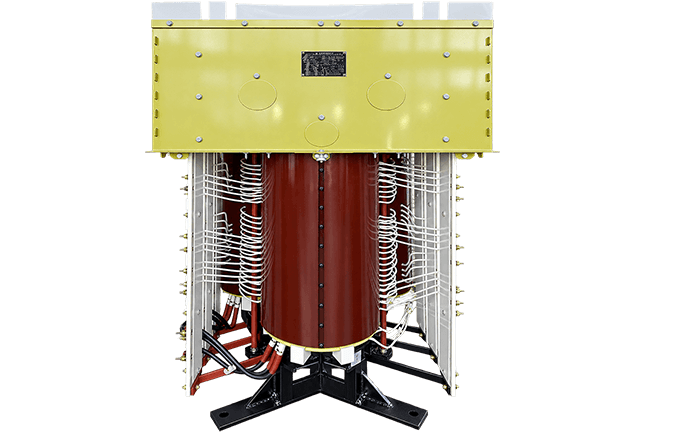
Delta-Core Phase-Shifting Rectifier Transformer — Dry Type Power Transformer
Uses an open-delta stacked core and ducted cooling to reduce equipment width for constrained sites.
- Application / fitMedium-voltage drives and rectifier systems with restricted footprint
- Rating / electrical range6–35 kV primary; multi-pulse secondary outputs
- Core / winding materialsCold-rolled grain-oriented silicon-steel delta core
- Electrical interfaceMultiple secondary busbars; engineered phase displacement
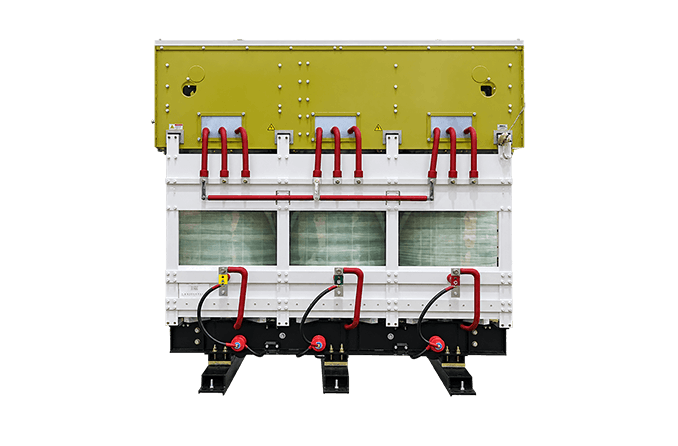
Four-Quadrant Phase-Shifting Rectifier Transformer — Dry Type Power Transformer
Supports bidirectional converter duty and regenerative energy return in four-quadrant drive systems.
- Application / fitMine hoists, cranes, test stands, propulsion and regenerative drives
- Rating / electrical rangeUp to 21,000 kVA; project pulse and voltage configuration
- Core / winding materialsSplit high-voltage winding with controlled low-voltage geometry
- Electrical interfaceBridge-group busbars; matched group impedance
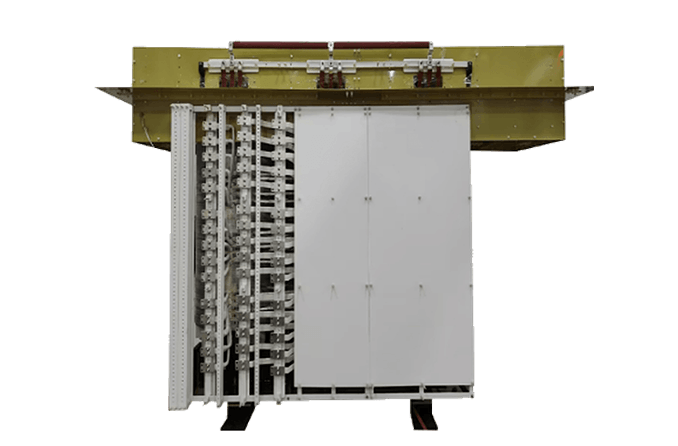
27,500 kVA / 24,300 kVA Phase-Shifting Rectifier Transformer — Dry Type Power Transformer
Combines high-capacity multi-winding conversion with reinforced cooling and transport structure.
- Application / fitUltra-high-capacity industrial rectifier and converter systems
- Rating / electrical range24,300 kVA or 27,500 kVA project ratings
- Core / winding materialsMulti-strand continuous high-voltage winding; ducted low-voltage windings
- Electrical interfaceHeavy-current busbars; project phase groups and impedance
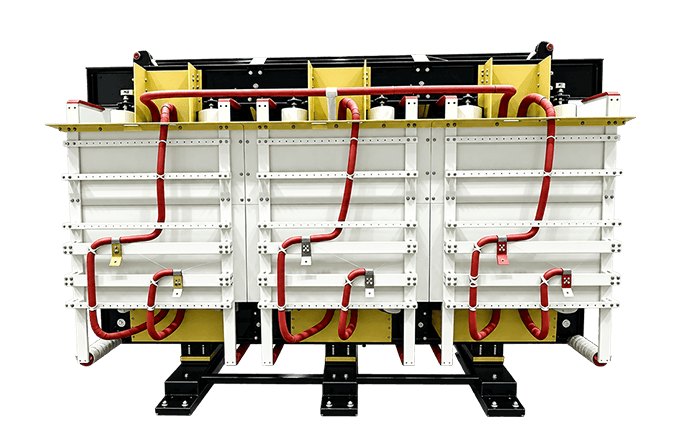
35 kV / 22 kV High-Voltage Multi-Winding Phase-Shifting Rectifier Transformer — Dry Type Power Transformer
Connects directly to 22 kV or 35 kV systems and supplies multiple phase-displaced low-voltage groups.
- Application / fitLarge rectifiers, rail traction, laboratories and renewable-grid testing
- Rating / electrical range22 kV or 35 kV primary; multiple secondary groups
- Core / winding materialsContinuous coils with increased insulation distance and corona control
- Electrical interfaceMedium-voltage cable terminations and low-voltage busbar groups
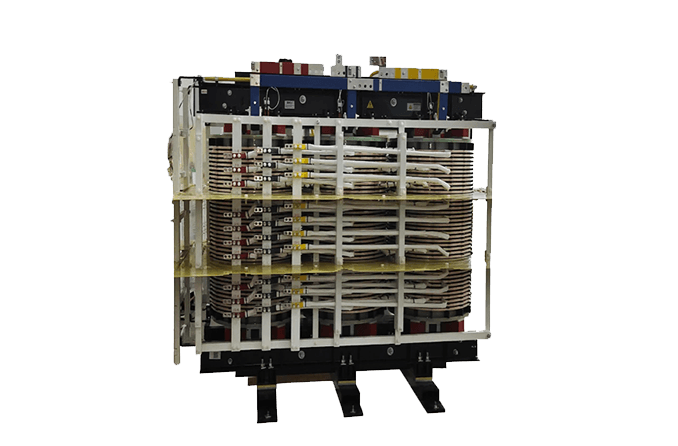
Phase-Shifting Rectifier Transformer for Data Center Power Systems — Dry Type Power Transformer
Feeds multiple rectifier modules for HVDC and selected UPS front ends while providing designed phase relationships.
- Application / fitData-center HVDC, 240 V or 336 V DC, UPS and modular rectifier systems
- Rating / electrical range12- or 24-pulse systems; 240/336 V DC front-end duty
- Core / winding materialsDry multi-winding construction with project-selected insulation
- Electrical interfaceIndependent secondary groups for rectifier modules
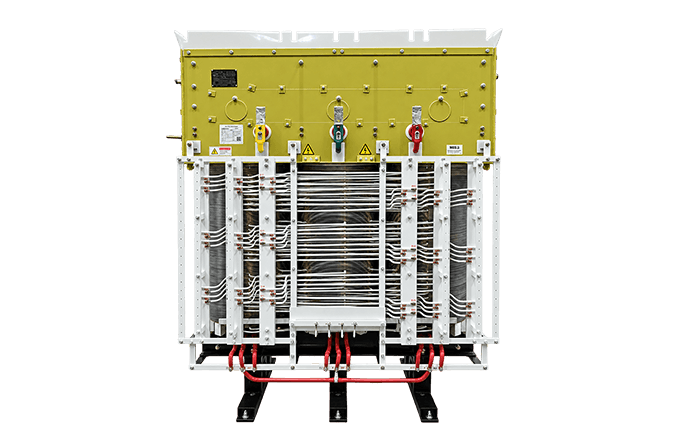
Phase-Shifting Rectifier Transformer for Variable-Frequency Drive Systems — Dry Type Power Transformer
Provides isolation, voltage conversion and phase-shifted supplies for multi-pulse medium-voltage drives.
- Application / fitMining, metallurgy, petrochemical, pumps, fans and propulsion drives
- Rating / electrical rangeUp to 20 kV; 12-, 18-, 24- or 36-pulse options
- Core / winding materialsH-class NOMEX insulation; copper or aluminum windings
- Electrical interfaceMultiple isolated secondary groups with specified vector angles
Ordering and Delivery for Engineered Transformers
Order terms separate the first engineered unit, pilot quantities and repeat production while keeping the approved technical specification unchanged.
Engineering unit — MOQ 1 unit; price is quoted against the approved electrical schedule and drawings; production begins after deposit and drawing approval.
Pilot project — 1–2 units; project pricing includes agreed routine tests, export packing and approval documents; typical production is 10–14 weeks after drawing approval.
Repeat supply — 3 or more units; negotiated batch pricing and reserved production windows are available against a rolling delivery schedule.
Made to order — standard engineered units typically require 10–18 weeks after approved drawings; special 22/35 kV, marine, AFWF or very-high-capacity designs require a project schedule.
Export delivery — FOB Shanghai, CIF and DAP are available by sea or air freight according to size, destination and import restrictions.
Standard documents — approved outline and connection drawings, nameplate data, packing list, commercial invoice and routine test report are supplied with the order.
Upload the Electrical Schedule or Reference Drawing
Send the project voltage, capacity, load, environment, quantity and interface data needed for an engineered quotation.
Questions Before a Transformer Order Is Released
These answers cover testing, approvals, installation readiness, shipping and warranty items that should be resolved in the purchase specification.
Which factory tests are included before shipment?
Every order includes the routine tests agreed for its transformer type, such as winding resistance, ratio and vector group, no-load and load loss, impedance and dielectric withstand. Partial-discharge, temperature-rise, sound-level or witness testing is added when the approved specification requires it.
Which drawings are issued for approval?
The approval package includes the outline, foundation and lifting data, terminal arrangement, cable or busbar interfaces, nameplate schedule and connection diagram. Final manufacturing follows the approved revision, so changes after approval are handled as an engineering change.
What must the installation area provide?
The site must maintain the specified ambient temperature, altitude, clearances, access and cooling airflow. Ventilated units require unobstructed intake and exhaust paths; outdoor, salt-mist, dusty or wet sites require the enclosure and corrosion package stated in the order.
How are large transformers prepared for international shipment?
The shipping plan uses moisture protection, blocked windings and accessories, lifting and center-of-gravity marks, and export packing matched to the equipment size. Oversize units may ship with removable enclosures or accessories identified on the packing list and assembly drawing.
What warranty applies to an engineered dry-type transformer?
The standard quotation basis is 12 months from commissioning or 18 months from shipment, whichever occurs first, covering manufacturing defects under the agreed voltage, load, cooling, installation and maintenance conditions. Project-specific warranty terms are stated in the signed order.
Send Your Electrical Schedule for a Dry-Type Transformer Quote
Include primary and secondary voltage, capacity, frequency, phase, vector group, impedance, load type, environment, quantity and destination.
- Phone: +86 152 6708 2061
- Email: [email protected]
- WhatsApp: +86 152 6708 2061
- 333 Minta Road, Songjiang District, Shanghai