
 BBELC

Rectifier and Transformer: Roles and Selection
The rectifier and transformer points to two device responsibilities that are different but can be combined. When checking the project around the rectifier transformer, first distinguish the role of the transformer and the rectifier, and then check the product configuration and scope of application.
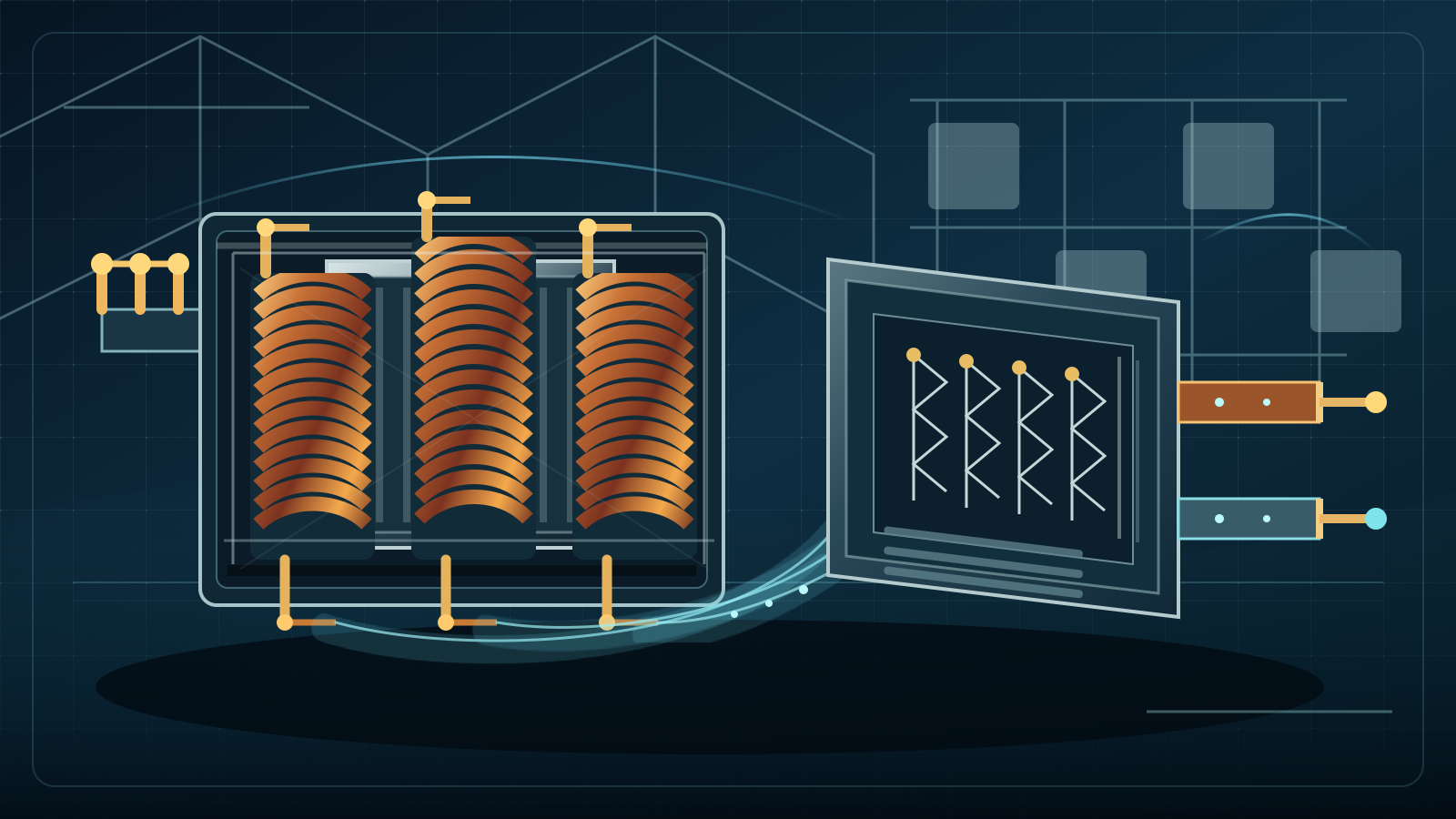
Responsibilities of Transformers and Rectifiers
Transformers use electromagnetic induction to transfer AC power between two or more windings and change the voltage, current, impedance, or phase relationship. Rectifiers use diodes, thyristors, or other semiconductor devices to change AC to pulsating DC with constant polarity. Both are not the same equipment.
The rectifier transformer is a special transformer for supplying power to the semiconductor rectifier device, which can bear the functions of voltage matching, electrical isolation, phase configuration and system impedance. Its body output is AC, and the DC output is formed by the rear-stage rectifier. “Transformer-rectifier group” represents the combined function of transformer and rectifier, and does not mean that the transformer body independently completes the conversion of AC to DC.
Phase-shift and the boundary of pulse-wave check
The technical conditions of the rectifier transformer can be listed AC power supply voltage and frequency, rectifier topology, pulse wave number, DC rated voltage, DC rated current, phase shift, each group of secondary side voltage, capacity distribution and short-circuit impedance.
12 pulse waves or 24 pulse waves alone cannot be used to introduce the final harmonic index. The phase-shifting transformer itself will not eliminate all harmonics, nor will it complete rectification; the relevant results need to be checked with the rectifier topology, load waveform and harmonic conditions.
Correspondence of project parameters
Multi-winding system can be listed separately for each group of secondary voltage, phase shift, capacity distribution, rated current, short-circuit impedance and allowable load imbalance. Continuous or periodic load system also belongs to the rectifier transformer technical conditions in the check content.
The load waveform and harmonic conditions can be used to verify the winding current rating, additional losses, and temperature rise. Dry, liquid immersion, natural cooling and forced cooling are different insulation and cooling configurations, and the capacity, phase shift angle, cooling method or voltage level of the product cannot be directly inferred from the universal label.
Applicable Direction of Shanghai North Transformer Products
Shanghai North Transformer provides H-class non-encapsulated dry-type rectifier transformers for frequency conversion and speed regulation. Related products include ZTSFG series supporting domestic frequency converters and ZPSG series supporting foreign frequency converters. Related products use multiple sets of phase-shifted secondary windings, indicating that the voltage level covered by the data is 20kV and below.
These products are oriented to the front end of voltage source type AC-DC-AC frequency conversion speed regulation system, and can be used for medium and high voltage frequency conversion drive, industrial transmission, mine lifting and drainage, metallurgy, petrochemical industry, ship electric propulsion and high-power testing. Specific data center power supply schemes may also involve HVDC, 240V or 336V DC power supply, UPS front end, multi-pulse rectification and modular rectification systems.
Therefore, the technical conditions of the project can list the AC input, rectifier topology, DC output, phase group, winding parameters, load waveform and configuration boundary involved in the rectifier and transformer separately, and then check with the scope of application of specific products.