 BBELC
BBELC
Reactive Power Transformer: Core Capacity & Load Control
56Optimize Reactive Power Transformer Core Capacity And Load Control To Manage Reactive Power Of Transformer For Grid.
View details
Search the whole station
To really do a good job of preventive maintenance of power transformer units, we must abandon the old “punch according to the calendar” mode of the past, and instead adopt the equipment status-oriented diagnostic method. This requires a tight combination of dissolved gas analysis (DGA), advanced electrical testing, and real-time acoustic monitoring. If you have to wait until the annual power outage overhaul to find out that the insulation is aging or the iron core clamp is loose, it is undoubtedly burying lightning for sudden failure and huge economic losses. Next, we will tell you without reservation how to interpret those extremely subtle fault data, how to avoid common diagnostic pits, and teach you to build an active health check system-so that you can uproot the fatal hidden danger a few months before the relay protection trips.
The traditional schedule often forces the maintenance team to carry out destructive and intrusive inspections on a completely healthy transformer. However, it is very easy to miss those faults that are deteriorating rapidly in the gap period of two inspections. After switching the logic of transformer health check to “state-oriented”, unnecessary human toss can be minimized. You can rely on the continuous transmission of data from sensors and targeted chemical analysis to determine when a power outage is really needed. In the final analysis, this idea can not only greatly extend the service life of the equipment, but also help the supervisors of factories and substations to cut a large amount of money.
Open those standard maintenance manuals and you’ll find a patchwork of test and inspection items scattered in different chapters. The PACE rule (I. e., Predictive prediction, Acoustic acoustics, Chemical chemistry, Electrical electricity) sorts these processes into a logical diagnostic chain. It is just like us humans going to the hospital for a physical examination. It can make the equipment supervisor lock the fault point accurately like a surgeon holding a scalpel.

Put edge-computing sensors on the main tank and casing, and you can catch those momentary anomalies that are almost never caught by manual daily inspections. Today, modern transformer network preventive maintenance has begun to use digital twin technology to correlate the fluctuation of ambient temperature with the change of top oil temperature. Once you find that the difference between the predicted thermodynamic model and the actual reading of the sensor is getting wider and wider, this becomes the most intuitive early warning signal-either the cooling system is out of chain or the internal sludge is seriously accumulated.
Acoustic emission tracking technology can sense local insulation defects in advance long before they generate large amounts of fault gases. The technicians of the substation are usually used to seeing with naked eyes whether there is oil leakage or silica gel changes color, but what the ultrasonic detector does is directly draw the map of the high-frequency stress wave inside the oil tank. By analyzing these acoustic signals, we can use the principle of triangulation to seize the exact location of partial discharge (PD) or loose structural parts, even if we do not release 1 drops of oil.
Dissolved gas analysis (DGA) is the ultimate blood test report for large oil-immersed transformers, with heat and electrical faults deep in the solid insulation. If you’re just staring at the absolute gas limits in the IEEE C57.104 standard, that’s definitely a bad strategy. A smarter approach is to use the Duval Triangle to dig deep into the gas production rate of specific combustible gases (such as ethylene and acetylene), which can give extremely accurate diagnostic conclusions about arc discharge or cellulose aging.
Sweep response analysis (SFRA) can be regarded as a “skeletal fingerprint” of the transformer core and winding “. After experiencing serious through failure or equipment handling, as long as the current SFRA curve is compared with the initial baseline data, it is immediately clear whether the winding has shifted and whether the iron core has deformed. Then the SFRA and the casing of the media loss (Power Factor) test to the handle, the casing in the end whether there is moisture, capacitor core whether there is aging can also be found clearly, which is equivalent to directly unplug the high-voltage equipment in the highest risk of the 1 “thunder”.
| PACE Category | Specific Test Name | Recommended Frequency / Trigger | Potential Fault Types |
| Predictive Analytics | Edge-Computing Sensor Tracking & Digital Twin Thermal Modeling | Continuous / Real-time (captures transient anomalies) | Cooling system inefficiencies, internal sludge buildup |
| Acoustic & Visual | Acoustic Emission Tracking (Ultrasonic) & Visual Inspection | Continuous/Condition-based (Acoustic) ; Daily (Visual) | Partial discharge (PD), localized insulation defects, loose structural components, oil leaks |
| Chemical | Dissolved Gas Analysis (DGA) & Duval Triangle Method | Periodic / Trend-based (analyzing gas generation rates) | Arcing, cellulose degradation, thermal and electrical faults deep within solid insulation |
| Electrical | Sweep Frequency Response Analysis (SFRA) & Bushing Power Factor Testing | Post-severe through-fault / Physical relocation | Winding displacement, core deformation, bushing moisture ingress, capacitor layer degradation |
Experienced old technicians know in their hearts that once the test environment is pulled, the diagnostic data they get are basically useless.
Misunderstanding 1: taking oil samples is too hasty. Pick a heavy wet day to pump oil samples, or use a pipeline that has not been cleaned by exhaust, will let the moisture in the air run into the syringe. As a result, a report from the laboratory said that the water content in the oil was too high, which made you spend a lot of money on completely unnecessary oil filtration and dehydration. Remember: be sure to thoroughly flush the drain valve, with a good air-tight glass syringe from the bottom of the valve to honestly sample.
Myth 2: Ignore the gas production rate (TDCG) of the DGA. Staring at the absolute limit of total dissolved combustible gas will only make you miss early failures. If the ethylene content of a transformer is 300 ppm, but the value has not changed 1 the whole year, then it is actually quite peaceful. On the contrary, a transformer with acetylene soaring from 10 ppm to 100 ppm in just 3 weeks is the proper time bomb. The trajectory and trend of gas production are the core indicators that determine how you should initiate an emergency response.
Misunderstanding 3: forget to restore the casing at the end of the screen grounding. After the media loss test, if you forget to re-ground the capacitor end screen, once the power is re-transmitted, it will cause a catastrophic casing explosion. This requires supervisors to enforce a dead rule: before switching on and sending power, there must be a paper confirmation form in black and white to verify that the grounding of the last screen has been properly restored.
Without professional interpretation by insiders, 1 pile of cold raw data is meaningless. Just last year, a third-party maintenance team recorded a seemingly “okay” total combustible gas level when testing a 45MVA industrial step-down transformer. But our engineers went back and 1 the historical trend and immediately noticed something was wrong: in a short 45-day window, hydrogen and methane had seen extremely sharp spikes. Following the PACE rule, the acoustic sensor decisively captured the low-intensity spark discharge near the tap changer. We made a quick decision to arrange a targeted power outage inspection. When we opened the 1, the contact of the selector switch was seriously carbonized-if it were a few weeks later, it would definitely lead to a serious interphase short circuit. Just because of this early intervention, the factory directly saved a full $1.2 million in equipment replacement costs, not to mention the loss of several months of shutdown.
The rigid calendar doesn’t care how old your equipment is and how heavy your load history is, but establishing a dynamic baseline can definitely protect your factory.
Condition monitoring equipment should be kept online around the clock. Basic visual inspection and infrared temperature measurement must be done once every quarter. As for the full set of oil chemical analysis (DGA), conventional transformers can be measured 1 a year. However, if you encounter old units or have a particularly heavy load at ordinary times, you will have to check them quarterly.
Active diagnosis means that you can find out minor problems such as water in the oil or cooling fan strike before the problem deteriorates into serious thermal aging of the insulation paper. To put it bluntly, how well you can protect the cellulose insulation directly determines that this transformer can serve for several more decades.
Definitely Dissolved Gas Analysis (DGA). Its greatest skill is to find out the hidden dangers of hot, ignition and partial discharge in the sealed fuel tank. When the equipment is running on power, DGA can provide you with early warning that offline electrical testing can’t catch.
Absolutely. At present, there are non-invasive acoustic emission sensors and ultra-high frequency (UHF) antennas. As long as they are attached to the outer wall of the fuel tank, even if the transformer is running at full load with electricity, it can still hear the movement of partial discharge clearly and accurately locate it.
You should know that in those catastrophic transformer explosion accidents, nearly 20% are caused by casing. The purpose of keeping an eye on the capacitance and dielectric loss (Tan Delta) of the casing is to prevent the insulation from collapsing and eventually causing a physical burst.
SFRA is not a routine test that puns in at the point. You will only use it at a few specific nodes: before the new unit is put into operation, after the transformer has moved to a new home, or after a serious external short circuit fault, you must use it to confirm whether the winding has internal injuries.
Water, like poison, will directly erode the solid insulation paper, greatly weaken its insulation strength, and press the fast forward key for chemical aging. If the moisture exceeds the standard and the operating temperature is high, not only the flash point of the oil will be pulled down in a straight line, but also the fatal risk of sudden insulation breakdown will be faced at any time.

Optimize Reactive Power Transformer Core Capacity And Load Control To Manage Reactive Power Of Transformer For Grid.
View details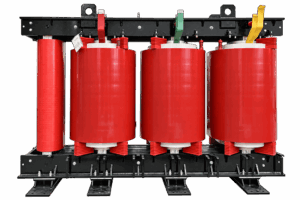
A power transformer uses alternating magnetic flux to transfer alternating electrical energy between two or more windings while changing the voltage, current, or impedance relationship. To really understand it, the more intuitive way is to take a ...
View details
Power Transformers Explained: Discover The Role Of Transformer In Power System Stability And Modern Grid Resilience.
View details
Compact Power Transformer With Cast-Resin Insulation, 100 kVA–12 MVA Ratings And A Custom Low-Footprint Design.
View detailsPlease fill in the arithmetic result.
The calculation is incorrect, please fill it in again.