
 BBELC

Distribution Transformer China
BBELC manufactures cast resin dry-type transformers for indoor power distribution. Send your voltage, capacity, installation conditions, and destination to discuss a transformer configuration and project quote.
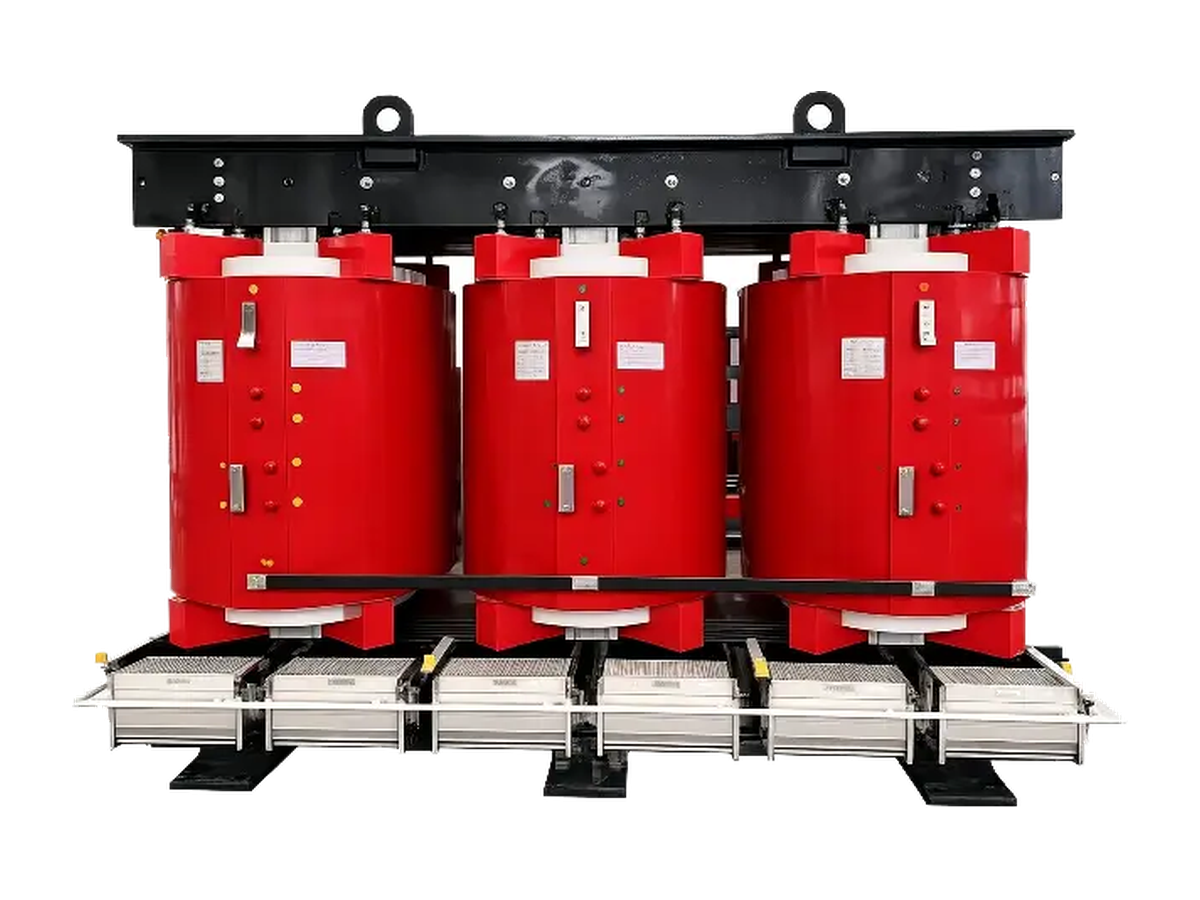
BBELC cast resin transformer for indoor distribution projects.
Cast Resin Distribution Transformers from BBELC
BBELC develops, designs, and manufactures transformers in China, with manufacturing locations in Shanghai Songjiang, Wenzhou, and Jinan. This page focuses on three-phase cast resin dry-type equipment for building and industrial power distribution.
Cast resin construction uses solid insulation around the windings without an insulating oil tank. For indoor installations, the room ventilation must remove the transformer’s operating losses as heat. Enclosure selection and airflow therefore belong in the initial specification, alongside the electrical ratings.
Match the Transformer to Your Electrical System
Start with the single-line diagram and the load profile. BBELC can customize electrical ratings, impedance, insulation, enclosure protection, and installation dimensions to suit the project.
| Requirement | What to provide | Why it affects selection |
|---|---|---|
| Voltage and frequency | Primary and secondary voltages, supply frequency, and expected voltage variation | Establishes the winding design, insulation requirements, and tap range. |
| Capacity and load | Required kVA, continuous and peak loads, duty cycle, and planned growth | Determines the thermal design and capacity needed under the intended cooling conditions. |
| Nonlinear or starting loads | Harmonic data, motor starting demands, and load cycles where applicable | Identifies additional heating and voltage-drop demands that a nominal kVA value does not describe. |
| System connection | Vector group, grounding arrangement, required impedance, and any parallel operation | Aligns the transformer with protection, fault-current limits, and load sharing. |
| Installation conditions | Indoor location, ambient temperature, altitude, ventilation, dust, moisture, and available space | Sets the cooling, enclosure, clearance, and dimensional requirements. |
For a replacement, include the existing nameplate data and connection drawings. Matching capacity alone leaves voltage ratio, phase displacement, impedance, and physical interfaces unresolved.
Explore the Cast Resin Transformer
Three-Phase Cast Resin Dry-Type Distribution Transformer.
Three-Phase Cast Resin Dry-Type Distribution Transformer
An epoxy resin-insulated transformer for indoor distribution in commercial buildings, industrial facilities, and public infrastructure. Voltage, capacity, impedance, and enclosure options can be specified for the installation.
- PhaseThree-phase
- Insulation constructionEpoxy resin cast, dry-type
- Voltage classUp to 35 kV
- Insulation classF or H, according to the selected design
- CapacitySelected for the project load and cooling conditions
- InstallationIndoor power distribution
Define Standards and Tests Before Production
Specify the required standard and edition in your inquiry. The cast resin product is manufactured to IEC 60076-11; destination requirements, acceptance criteria, and any additional certification requirements should be included in the technical review.
Each unit is supplied with a routine test report. The product’s routine testing covers insulation resistance, voltage ratio and vector group, winding resistance, no-load and load losses, partial discharge, and applied and induced voltage withstand tests. Factory-witnessed testing and third-party laboratory retesting are available.
Set the required loss values, temperature rise, impedance tolerance, sound level, dimensions, and document deliverables before approving the design. Include any type or special tests and witness points in the purchase specification so they can be reflected in the inspection plan and schedule.
Build a Comparable Quote and Delivery Plan
Transformer pricing depends on voltage, capacity, winding materials, impedance, loss targets, insulation, enclosure, cooling accessories, and testing requirements. A lower-loss design can reduce operating energy costs while requiring more active material, which changes the purchase price.
Use the same scope when comparing supplier quotations:
- Transformer, enclosure, cooling equipment, temperature monitoring, and other required accessories.
- Routine reports, drawings, manuals, and any additional tests or witnessing.
- Packaging, freight, insurance, delivery location, and the agreed trade term.
- Installation or commissioning support, spare parts, and warranty terms.
Include the quantity, destination, and required arrival date with your technical requirements. The delivery plan needs to identify drawing approval, material procurement, manufacturing, testing, shipment, and transit. Define the event that starts the quoted lead time, such as technical approval or contract effectiveness, so the schedule can be aligned with your project.
Request a Distribution Transformer Quote
Send your electrical requirements and installation conditions to BBELC. Include the quantity, delivery destination, required arrival date, and applicable standard so the team can review the configuration and quotation scope.
- Phone: +86 152 6708 2061
- Email: [email protected]
- WhatsApp: Contact BBELC
- Address: 333 Minta Road, Songjiang District, Shanghai, China.