
 BBELC
BBELC
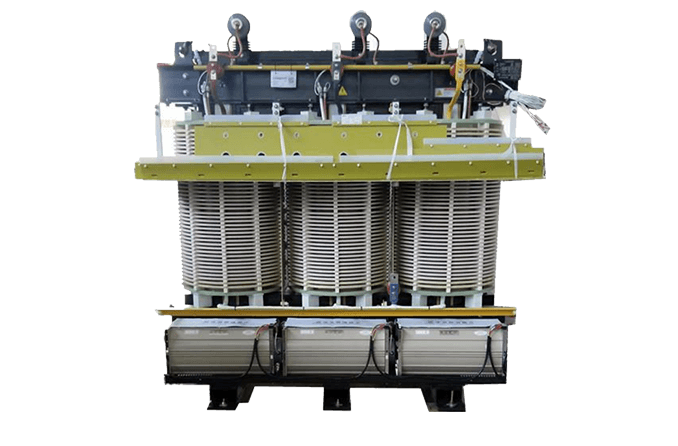

Best Marine Isolation Transformer
Series: MDIT Series
The best unit matches the vessel or shore-power service, with scalable 50/60 Hz dry-type designs covering compact amp-rated loads through engineered medium-voltage systems. Voltage, current, grounding, enclosure, cooling and marine approval inputs determine capacity, terminals and environmental protection. Full galvanic separation also supports shore-power safety and corrosion control beyond a diode-based galvanic isolator.
- Rated capacityUp to 12 MVA
- Primary voltage6 or 6.6 kV; engineered to 35 kV
- Frequency50/60 Hz
- SupplyMade to order
- MOQ1 unit
- CustomizationElectrical, cooling, enclosure and interfaces
Which Marine Isolation Transformer Capacity Best Fits the Shore-Power Service?
A marine isolation transformer is sized from the actual shore-power voltage and current, not from a brand ranking or enclosure label.
For a single-phase service, the initial apparent-power floor is volts × amps ÷ 1,000. Three-phase systems use √3 × line voltage × line current ÷ 1,000, followed by a design margin for continuous loading, inrush, harmonics, temperature and the applicable marine rules.
| Shore-power service | Minimum apparent power | Configuration priority |
|---|---|---|
| 120 V / 30 A, single phase | 3.6 kVA floor; 5 kVA is a practical next rating | Compact enclosure, low inrush and correct grounding arrangement |
| 240 V / 50 A, single phase | 12 kVA floor; 15 kVA provides operating margin | 50 A terminals, ventilation and shore-voltage compatibility |
| 240 V / 100 A, single phase | 24 kVA floor; 30 kVA provides operating margin | Heat removal, cable entry, mass and service access |
| Medium-voltage port or vessel system | Three-phase calculation from approved voltage and load schedule | 6/6.6 kV input, grounding, harmonics, protection and class documentation |
The best selection is the smallest compliant rating that carries continuous load and expected inrush while meeting the required voltage, frequency and marine approval basis.
Which Inputs Determine the Marine Isolation Transformer Configuration?
The final transformer configuration changes with the shore source, onboard load, grounding method, installation space and marine environment.
Electrical Source and Load
Input and output voltage, current or kVA, phase, 50/60 Hz frequency, grounding, available short-circuit current, load harmonics, motor starting and expected inrush set the winding, insulation and protection design.
Installation and Marine Environment
Available footprint, cable entry, service access, vibration, inclination, humidity, condensation, salt spray, ambient temperature and cooling route set the enclosure, terminals, corrosion treatment and heat-removal method.
Approval and Delivery Package
Flag, class or project standard, document language, drawing format, witness tests, quantity and destination determine the approval records, factory-test plan, packing and shipping scope.
Freezing those inputs before drawing approval prevents mismatched terminals, insufficient cooling, protection conflicts and late certification changes.
When Is a Marine Isolation Transformer Better Than a Galvanic Isolator?
A marine isolation transformer and a galvanic isolator both address corrosion concerns, but they do not provide the same electrical function.
| Decision factor | Marine isolation transformer | Galvanic isolator |
|---|---|---|
| Electrical separation | Separate primary and secondary windings provide full galvanic separation between shore and onboard supply. | Semiconductor elements act in the protective-ground path; line and neutral are not transformer-isolated. |
| Voltage conversion | Can convert voltage and establish a separately derived onboard supply when designed for that purpose. | Does not change shore voltage or create an isolated secondary supply. |
| Protection role | Supports corrosion control and a coordinated shock, grounding and fault-protection design. | Blocks low-voltage galvanic current while remaining part of the approved grounding-conductor protection path. |
| Installation burden | Adds mass, space, ventilation, inrush, protection and a higher purchase cost. | Smaller and less expensive, but limited to its grounding-path function. |
A transformer is the appropriate route when the system requires full winding separation, a separately derived onboard supply or voltage conversion, while a galvanic isolator only blocks low-voltage galvanic current in the grounding path.
Marine Isolation Transformer Ratings and Interfaces
The MDIT Series is configured around the approved load schedule, shore source, enclosure and vessel interface.
| Product name | Best Marine Isolation Transformer |
|---|---|
| Series | MDIT Series |
| Product category | Dry-type marine shore-power isolation transformer |
| Rated range | 50/60 Hz; 6 or 6.6 kV primary options; engineered range up to 35 kV and 12 MVA |
| Frame and dimensions | Project frame sized to kVA, cooling and enclosure; approved GA drawing supplied before manufacture |
| Fabrication tolerance | Enclosure ±3 mm; mounting-hole position ±1.5 mm |
| Active materials and insulation | Copper windings, CRGO steel core, F/H-class dry insulation; VPI or cast-resin build by rating |
| Electrical interface | Copper busbar or cable-lug terminals, protective-earth stud and temperature-sensor leads; cable entry by approved drawing |
| Standard basis | IEC 60076-11; IEC 60092-303 and specified class rules when included in the order |
| Marking and traceability | Stainless nameplate with serial number, ratings, vector group and terminal marks; batch-linked inspection records |
| Packaging unit | 1 transformer per export skid or wooden case with moisture barrier and lifting marks |
Marine Isolation Transformer Operating Conditions
Ratings apply to the approved configuration. Ambient, altitude, harmonics and ventilation remain part of the thermal design.
Marine Isolation Transformer Order Terms and Delivery
The baseline terms below support budgeting for a made-to-order configuration; the firm quotation follows the approved technical schedule.
- Minimum order1 unit
- First-article routeNo reduced-power sample; the first unit can follow paid first-article drawing and test-plan approval
- Engineering packagePreliminary datasheet and GA drawing in 7–10 working days
- Production lead time35–60 working days after technical approval and deposit for standard project configurations
- Starting price and availabilityPre-order; from USD 18,000 per unit, EXW Shanghai
- Export packingSkid or wooden case, moisture barrier, lifting marks and accessory box
- Payment terms30% deposit with order and 70% before shipment after factory test documents are issued
- Shipping supportFOB/CIF sea freight for large units; air freight when size and mass permit
Who Designs and Builds This Marine Isolation Transformer?
Shanghai Beibian Technology Co., Ltd. develops, designs and manufactures special transformers for marine, shore-power, industrial and energy applications.

Shanghai Beibian Technology Co., Ltd.
The manufacturing flow covers contract review, engineering, material inspection, winding, insulation treatment, core production, assembly, final electrical tests, outgoing inspection, packing and delivery. Marine builds can add stainless or Dacromet-treated fasteners, three varnish applications, protective core coating, 16 μm busbar plating and sealed insulation edges.
- Custom voltage, impedance, insulation, cooling, enclosure, footprint and terminal design
- Incoming, in-process, final electrical and outgoing inspection stages
- Factory test records and approved drawings supplied with the order
- Technical support for installation, commissioning and project documentation
Marine Isolation Transformer Standards and Compliance Documents
The quotation document list separates the transformer design standard, marine project rules, management-system certification and destination-market declarations.
- IEC 60076-11 dry-type transformer design and test basisApplied to the offered configuration
- IEC 60092-303 and specified ship or class rulesApplied when listed in the purchase specification
- ISO management-system certificationCurrent scope document included for buyer review
- CE, ETL and UL documentationModel and destination coverage matched in the quotation
- RoHS and REACH declarationsIncluded when required by the destination and order scope
- Routine and contract test recordsSerial-number-linked report package supplied before shipment
Send Marine Isolation Transformer Project Requirements
Include shore and load voltage, current or kVA, phase, frequency, grounding, enclosure, cooling, class or standard, quantity and destination.
- Phone: +86 152 6708 2061
- Email: [email protected]
- WhatsApp: +86 152 6708 2061
- 333 Minta Road, Songjiang District, Shanghai